

Commercial painting projects typically take between 3 and 14 days to complete, depending on the building size. Small office suites often require 3–5 days, while large warehouses or retail centers can take 2 weeks or more. Factors like surface preparation, paint type, and crew size significantly influence the final project duration.
Planning a renovation for your business in Ireland requires precision. Time is money, and every day your facility is under construction is a day that could affect your operations. Whether you are managing a storefront in Galway or a corporate headquarters in Dublin, knowing the exact commercial painting timeline is essential for a smooth workflow.
This guide breaks down every stage of the process. We look at the technical requirements of industrial painting and the logistical reality of interior office refreshes. By understanding these timelines, you can coordinate with staff, inform clients, and ensure your project stays on track without unexpected delays or hidden costs.
Average Commercial Painting Timeline (Quick Overview)
Estimating the duration of a project starts with categorizing the scale of the work. While every building is unique, most commercial projects in Ireland follow a predictable pattern based on square footage and the complexity of the environment.
The following table provides a general baseline for common commercial project sizes in the Irish market:
| Project Scale | Square Footage (Approx.) | Estimated Duration |
| Small (Retail/Office) | 500 – 2,500 sq. ft. | 3 – 5 Days |
| Medium (Medical/School) | 2,500 – 10,000 sq. ft. | 5 – 10 Days |
| Large (Warehouse/Plant) | 10,000+ sq. ft. | 2+ Weeks |
Commercial Painting Timeline Breakdown (Step-by-Step)
A professional painting project is a multi-stage process. It is not just about applying color; it involves meticulous planning and technical execution. Skipping steps might save a few hours initially, but will lead to premature peeling and higher costs later.
Step 1: Site Inspection & Planning
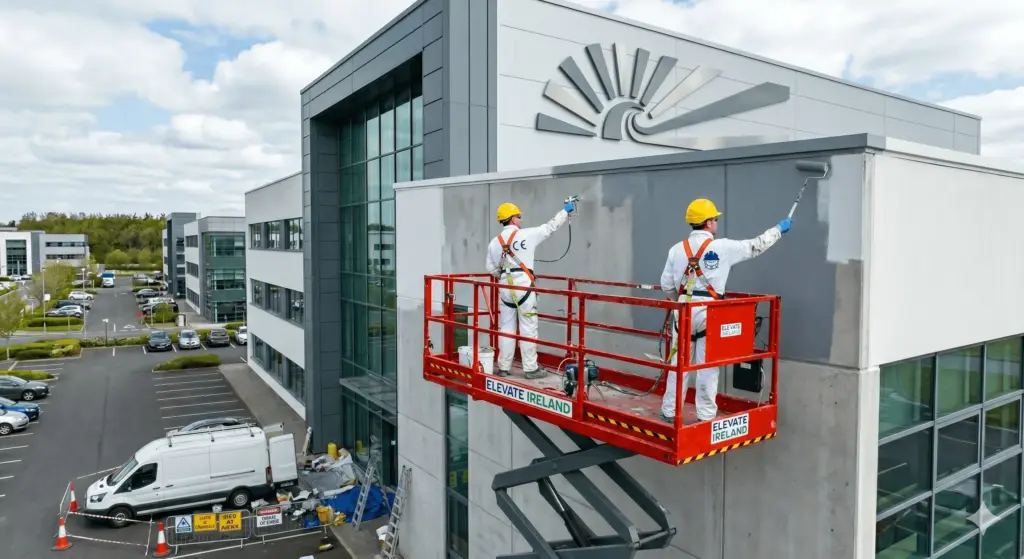
The process begins with a detailed walkthrough. A contractor assesses the substrate, measures the area, and identifies access challenges. In Ireland, this stage also includes health and safety planning, such as drafting Method Statements and Risk Assessments (RAMS). This planning phase usually takes 1 to 2 days before any paint arrives on-site.
Step 2: Surface Preparation
Preparation is the most time-consuming part of any high-quality project. This involves power washing exterior walls, scraping loose paint, sanding surfaces, and filling cracks. For industrial painting, it may include degreasing floors or removing rust from metal. Expect prep work to take up 30% to 40% of the total project timeline.
Step 3: Priming & First Coat
Once the surface is clean and dry, the primer is applied. Primer ensures the paint bonds correctly to the material. In the Irish climate, moisture levels must be checked before application. The first coat follows once the primer is stable, providing the initial layer of protection and color foundation.
Step 4: Multiple Coats Application
Most commercial projects require at least two coats of high-grade paint for full opacity and durability. The time required depends on the application method. Using airless sprayers is much faster for large open areas like warehouses, while brushes and rollers are used for detailed office interiors and trim work.
Step 5: Drying & Curing Time
There is a difference between “dry to the touch” and “fully cured.” While paint may feel dry within hours, it remains vulnerable to scuffs and chemicals until it cures. In Ireland’s humid conditions, fans or dehumidifiers are often used to maintain the ideal environment, ensuring the coats set properly within 24 to 48 hours.
Step 6: Final Inspection & Cleanup
The final stage involves a “snag list” walkthrough with the project manager. Any minor touch-ups are completed, and all protective coverings are removed. A professional crew ensures the site is left spotless, disposing of all chemical waste according to local Irish environmental regulations.
Key Factors That Affect Commercial Painting Time
Several variables can speed up or slow down your project. Understanding these helps you set realistic expectations for your stakeholders.
Building Size & Complexity
A large, open-plan warehouse is often faster to paint per square foot than a small office with many rooms, doors, and intricate moldings. Complexity increases the time needed for “cutting in” around edges and fixtures.
Surface Condition & Repairs
If the existing paint is failing or the walls have significant damage, the preparation time doubles. Extensive patching, caulking, or masonry repair must be completed and dried before the first drop of paint is applied.
Type of Paint Used
Specialized industrial coatings, such as high-gloss epoxies or anti-corrosive paints, often have specific mixing and “pot life” requirements. These technical paints may require longer intervals between coats compared to standard water-based latex.
Number of Coats Required
Going from a dark color to a light color often requires a dedicated primer plus three coats of paint. Each additional layer adds labor time and requires a full drying cycle before the next application.
Crew Size & Equipment
A team of two painters will take significantly longer than a team of six. Furthermore, using advanced equipment like scissor lifts or industrial sprayers can cut the application time in half compared to traditional manual methods.
Accessibility & Height
Projects requiring scaffolding, cherry pickers, or specialized rigging take longer due to the setup and safety protocols involved. Working at height naturally slows down movement and material transport.
Weather Conditions
For exterior projects in Ireland, rain and high humidity are the biggest hurdles. Painting cannot occur on wet surfaces, and high moisture levels can prevent paint from adhering, leading to mandatory “weather days” in the schedule.
Interior vs Exterior Painting Timeline
Interior projects offer more control, while exterior projects are at the mercy of the Irish elements.
| Feature | Interior Painting | Exterior Painting |
| Environmental Control | High (HVAC/Heating) | Low (Weather dependent) |
| Prep Complexity | Protecting furniture/floors | Power washing/Scaffolding |
| Average Speed | Faster (Stable conditions) | Slower (Wind/Rain delays) |
| Drying Time | 2–4 hours between coats | 4–8 hours (depends on sun/wind) |
Surface Preparation Time by Material
Different materials require different levels of care to ensure the paint lasts for the long term.
Concrete Surfaces
Concrete, especially in new builds or industrial floors, may require “etching” or grinding to open the pores. This ensures the epoxy or paint doesn’t peel. Testing for moisture content is a critical, time-sensitive step for concrete.
Metal Surfaces
Industrial metal requires rust removal and degreasing. This often involves wire brushing or sandblasting. A specialized metal primer must then be applied immediately to prevent flash rusting, adding a technical layer to the timeline.
Wood Surfaces
Wood is porous and requires significant sanding and filling. It often needs a longer drying time after cleaning because it absorbs water. Priming wood is essential to prevent tannins from bleeding through the finish.
How Long Does Paint Take to Dry & Cure?
Drying and curing are two separate stages of the chemical process.
Latex Paint Drying Time
Standard commercial latex paint is usually dry to the touch in 1 to 2 hours. In a well-ventilated office, a second coat can often be applied after 4 hours, allowing a room to be finished in a single day.
Oil-Based Paint Drying Time
Oil-based paints and specialized industrial enamels take much longer. They often require 6 to 8 hours to be dry to the touch and a full 24 hours before a second coat can be safely applied.
Full Curing Time Explained
While you can walk on a floor or touch a wall after a day, “curing” takes 7 to 30 days. During this time, the paint reaches its maximum hardness. It is important not to scrub or use harsh chemicals on the walls during this period.
Can Commercial Painting Be Done After Hours?
Yes, most professional contractors in Ireland offer out-of-hours services. This is a common strategy to avoid business disruption.
Working nights or weekends allows the crew to move faster because they don’t have to navigate around staff or customers. While the labor rate might be slightly higher for night shifts, the “opportunity cost” saved by keeping your business open during the day often makes it the more economical choice.
How to Speed Up a Commercial Painting Project
If you are on a tight deadline, there are ways to accelerate the process:
- Use Fast-Drying Coatings: Ask for professional “dry-fall” or quick-dry paints.
- Increase Crew Size: Bringing in more labor can compress the schedule.
- Use Spray Equipment: Sprayers cover large areas much faster than rollers.
- Clear the Space: Having all furniture and equipment moved before the painters arrive saves hours of labor.
- Opt for Off-Site Prep: If possible, have removable items like cabinet doors painted at the contractor’s shop.
Common Delays That Increase Project Time
- Unforeseen Repairs: Discovering mold, rot, or structural damage during prep.
- Poor Communication: Waiting for color approvals or site access.
- Equipment Failure: Breakdowns in lifts or sprayers.
- Climate Issues: Extreme humidity in Ireland is preventing paint from bonding.
- Last-Minute Changes: Altering the color scheme or scope after work has started.
How to Plan Your Commercial Painting Project (Checklist)
Use this checklist to ensure your timeline stays accurate:
- Define the Scope: List every room, wall, and ceiling to be painted.
- Request Quotes Early: Book at least 4–6 weeks in advance.
- Check the Weather: For exterior work, aim for the drier months (May–September).
- Prepare the Site: Clear desks, take down wall hangings, and secure electronics.
- Assign a Liaison: Have one person to make quick decisions on-site.
- Verify Insurance: Ensure the contractor has Public Liability and Safe Pass cards.
Real Example Timelines (Use Cases)
Small Office Project
A standard 3-room office suite (approx. 800 sq. ft.) usually takes 3 days. Day 1 is prep and priming; Day 2 is the main application; Day 3 is trim work, cleanup, and inspection.
Retail Store Painting
A 2,000 sq. ft. retail unit usually takes 4 to 5 days. Because appearance is critical, extra time is spent on high-end finishes and ensuring branding colors are perfectly matched.
Warehouse Painting
A 20,000 sq. ft. warehouse interior can take 10 to 14 days. The use of aerial lifts and industrial sprayers allows for fast coverage of ceilings and walls, but the sheer scale requires significant logistical coordination.
Why Hiring the Right Contractor Saves Time
An experienced commercial contractor uses a systematic approach that a general handyman cannot match. Professionals bring larger crews and industrial-grade equipment that completes the work in a fraction of the time. They also provide accurate timelines upfront, helping you avoid the “endless project” scenario.
FAQs
How long does commercial painting take per square foot?
On average, a professional can cover 150–200 square feet per hour for standard walls. However, this varies wildly based on whether they are using a brush, roller, or sprayer.
Can painting be done without closing a business?
Absolutely. Many projects are completed in sections or during “off-hours” (nights and weekends) to ensure your business remains fully operational.
How long before reopening after painting?
For standard interiors using low-VOC paint, you can often reopen the space as soon as the paint is dry to the touch (2–4 hours).
What causes delays in painting projects?
The most common delays in Ireland are weather (for exteriors), discovered surface damage, and delays in color or material delivery.
How many coats are needed?
Most commercial standards require one coat of primer and two coats of finish paint to ensure color consistency and long-term durability.
Conclusion
Understanding how long commercial painting takes is the key to a stress-free renovation. While a small office might only take a few days, larger industrial sites require a more robust timeline of two weeks or more. By focusing on preparation and hiring a team with the right equipment, you can ensure a high-quality finish that stands the test of time.
Don’t leave your business timeline to chance. Partner with experts who respect your schedule as much as your property.
Contact us today to request a detailed timeline estimate for your next project. Get a free quote, and let’s get your business looking its best.

At ConneallyGroup.com, our editorial content is developed by experienced professionals in construction, engineering, and infrastructure services. We aim to provide valuable guidance, helpful resources, and industry insights that support clients and stakeholders at every stage — from planning and design to execution and completion. Our focus is on clarity, integrity, and practical solutions you can trust.